World Stroke Day 2026: Every Minute Counts in the Race to Save Lives
Stroke remains a major global health challenge, claiming millions of lives and leaving many survivors with long-term disabilities. As the world marks World Stroke Day on October 29, 2026, the World Stroke Organization (WSO) is calling for greater public awareness of stroke symptoms and urgent action when they occur.
This year’s campaign theme is “Every M1nute Counts”, supported by the call to action #ActFAST. The campaign emphasises that recognising the warning signs of stroke and seeking emergency medical care immediately can save lives and improve the chances of recovery.
The urgency of the message is underscored by figures from the World Health Organization (WHO), which reported in its December 2025 stroke fact sheet that an estimated 11.9 million new stroke cases occurred worldwide in 2021. The same estimates showed that 93.8 million people were living with the effects of stroke that year, while stroke ranked as the third leading cause of death and disability combined globally.
According to the World Stroke Organization’s Global Stroke Fact Sheet 2025, stroke accounted for approximately 7.25 million deaths in 2021, making it the world’s second-leading cause of death. The report also estimated that stroke resulted in more than 160 million disability-adjusted life years lost, reflecting the combined impact of premature deaths and years lived with disability.
These figures highlight the scale of the problem and the importance of prevention, early recognition, timely treatment and rehabilitation.
Nigeria faces a growing stroke challenge
In Nigeria, stroke remains an important public health concern, with high blood pressure identified as a major risk factor. WHO estimates for 2023 listed stroke among the leading causes of death in the country, accounting for an estimated 40 deaths per 100,000 people across the population. The figures were 41.7 per 100,000 females and 38.5 per 100,000 males. WHO cautions that these are statistical estimates because Nigeria’s death registration data are not sufficiently reliable for direct use in national mortality assessments.
A 2025 systematic review published in Next Research examined 27 Nigerian studies involving 27,061 participants. It found that reported stroke prevalence varied considerably across the studies and identified hypertension as a leading risk factor. The review also highlighted late hospital presentation, limited access to specialised stroke units and clot-dissolving treatment, and gaps in rehabilitation services as challenges affecting patient outcomes. The researchers reported short-term mortality estimates ranging from 22 to 46 per cent across the included studies, although outcomes varied by study and setting.
These findings reinforce the need for stronger public education, routine blood pressure checks, accessible emergency services and improved stroke care across Nigeria.
Recognising the warning signs can save a life
Stroke occurs when blood supply to part of the brain is interrupted, either by a blocked blood vessel or bleeding in the brain. Without adequate oxygen, brain cells begin to die, potentially causing lasting damage to movement, speech, memory and other essential functions.
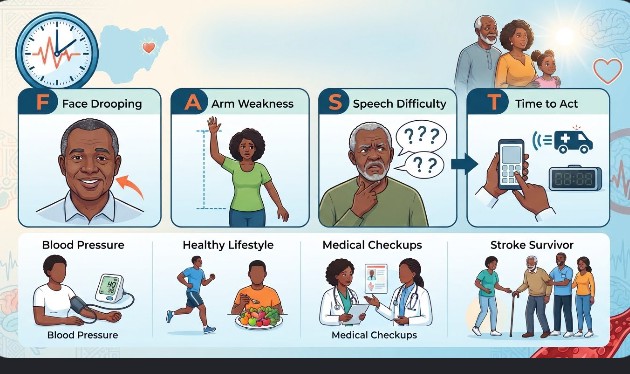
The World Stroke Organization encourages people to remember FAST, a simple way to recognise common warning signs:
F
Face drooping
One side of the face may suddenly droop, or the person may be unable to smile evenly.
A
Arm weakness
One arm may suddenly become weak or numb, or the person may be unable to raise both arms equally.
S
Speech difficulties
Speech may become slurred, unclear or difficult to understand. The person may also struggle to find words.
T
Time to act
Seek emergency medical care immediately. Do not wait to see whether the symptoms will disappear.
Other warning signs include sudden loss of balance, vision problems, confusion, numbness on one side of the body and a severe, unexplained headache. Symptoms may vary from one person to another, and their sudden onset is particularly concerning. Even if the symptoms disappear after a short time, urgent medical assessment is necessary.
When stroke is suspected, call the available local emergency service or arrange immediate transport to a hospital equipped to assess and treat stroke. Note the time the symptoms began, if known. Do not give the person food, drinks or medication unless instructed by a medical professional, and do not attempt to treat the condition with home remedies.
Prevention starts with everyday health decisions
Although stroke can affect people of different ages, many strokes are associated with risk factors that can be reduced or managed. The WHO identifies high blood pressure, smoking, high cholesterol, diabetes-related high blood glucose, excess body weight, physical inactivity, unhealthy diets high in sodium and harmful alcohol use among the major modifiable risk factors.
World Health Organization
Health professionals encourage people to:
- Check their blood pressure regularly and seek treatment when it is elevated.
- Eat a balanced diet rich in vegetables, fruits and other nutritious foods while limiting excessive salt intake.
- Engage in regular physical activity appropriate to their health and ability.
- Avoid smoking and tobacco products.
- Attend medical appointments to monitor and manage conditions such as hypertension, diabetes and high cholesterol.
- Take prescribed medication consistently and avoid stopping treatment without medical advice.
These steps do not guarantee that stroke will never occur, but they can help reduce the risk. Prevention also requires accessible health services, affordable medicines, public awareness and early diagnosis.
The need for timely treatment and long-term support
Surviving a stroke does not always mean a person immediately returns to normal life. Some survivors experience difficulty walking, speaking, swallowing, remembering information or carrying out everyday activities. Others require ongoing support for emotional and psychological challenges.
Rehabilitation can help survivors regain abilities and improve their independence. Depending on individual needs, care may include physiotherapy, speech and language therapy, occupational therapy, medical follow-up and psychological support.
For Nigerian families, the financial and practical demands of stroke care can be considerable, particularly when treatment and rehabilitation require repeated hospital visits. Strengthening emergency response systems, expanding access to specialised care and supporting caregivers are therefore important parts of addressing the stroke burden.
Turning awareness into action
World Stroke Day is an opportunity for individuals, healthcare providers, community organisations, journalists and policymakers to ensure that stroke awareness goes beyond social media messages and becomes practical knowledge that saves lives.
Communities can organise blood pressure screening, share reliable information about warning signs, encourage people to seek medical attention promptly and challenge the misconception that stroke affects only older people. Healthcare authorities must also continue working towards timely diagnosis, effective treatment and rehabilitation services that are accessible to people regardless of their income or location.
The message of the 2026 campaign is clear: every minute counts when a stroke occurs. Knowing the signs is important, but acting immediately is what connects that knowledge to lifesaving care.
This World Stroke Day, learn the warning signs, share them with family and friends, and never ignore sudden symptoms that could indicate a stroke.
Every M1nute Counts. #ActFAST.