World Mental Health Day 2026: Lived Experiences Heard, Real Voices, Real Change
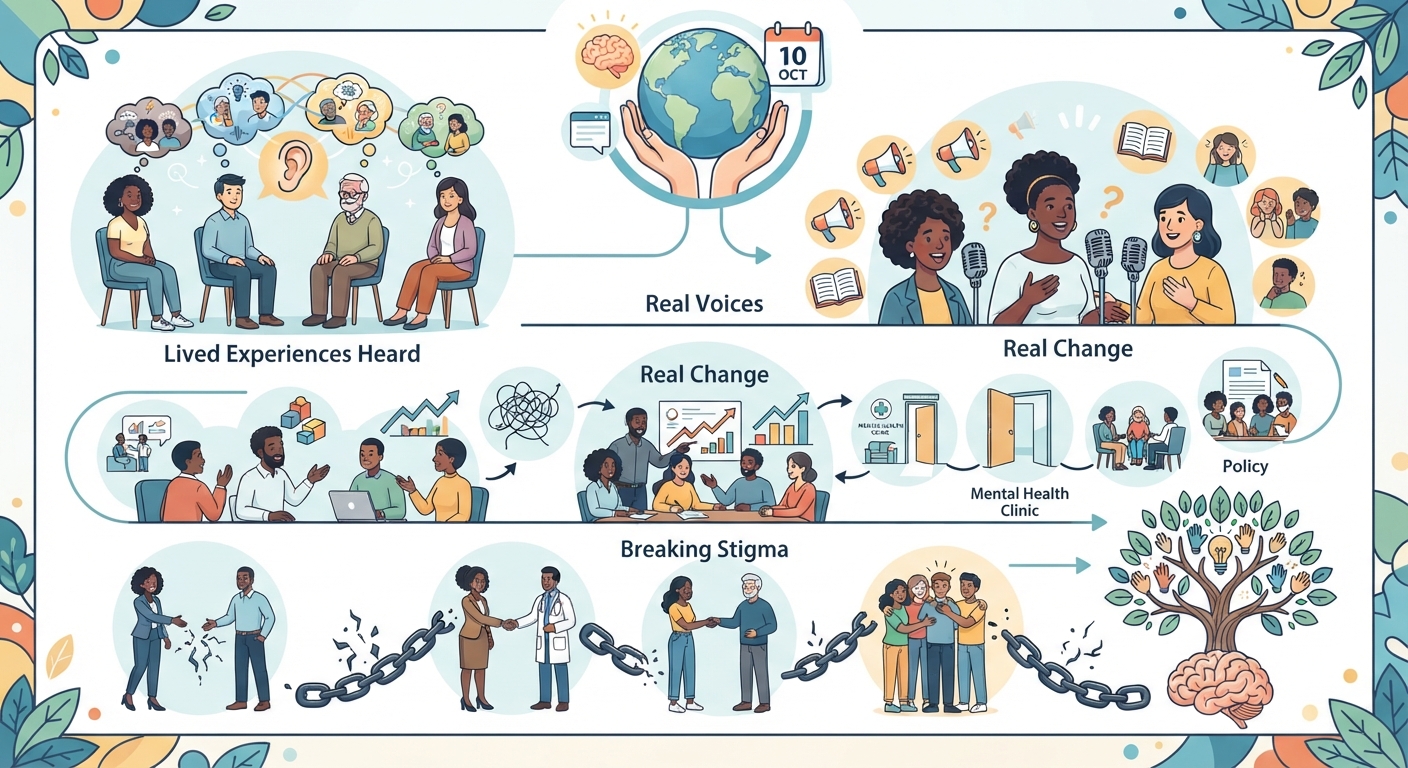
World Mental Health Day, observed on October 10, is an opportunity to remind people that mental health is just as important as physical health. This year’s theme, “Lived experiences heard: real voices, real change,” calls on individuals, communities, healthcare providers and governments to listen to people who have experienced mental health challenges and involve them in decisions that affect their lives.
Mental health affects how we think, feel, relate to others and cope with everyday challenges. Anyone can experience mental health difficulties, regardless of age, gender, background or financial status. Stress, grief, unemployment, financial hardship, family problems and other life experiences can affect a person’s emotional well-being. Some people may also experience conditions such as depression, anxiety or other mental health disorders that require professional care.
Despite its importance, mental health is still misunderstood in many communities. People experiencing mental health challenges may be described as weak, lazy or spiritually troubled. Some are afraid to speak about their feelings because they fear being judged, rejected or misunderstood. These attitudes can prevent people from seeking the help they need.
The Global Picture
Mental health is a major public health concern worldwide. According to the World Health Organization (WHO), nearly one in seven people globally lived with a mental disorder in 2021 highlighting the scale of the challenge and the need for accessible care. Depression and anxiety are among the most common mental health conditions, affecting people’s relationships, education, work and daily activities.
The WHO also warns that many people living with mental health conditions do not receive effective treatment. This means that beyond raising awareness, countries must strengthen mental health services and make support more accessible, affordable and acceptable to those who need it.
In Nigeria, mental health deserves greater attention, particularly because stigma, limited access to specialised care and financial barriers can make it difficult for people to seek help. Mental health support should not be available only to those who can afford expensive private services. People in rural communities, young people, low-income households and other underserved groups also deserve access to appropriate care.
Why This Year’s Theme Matters
The theme, “Lived experiences heard: real voices, real change,” reminds us that people who have experienced mental health challenges have important knowledge that should not be ignored.
Listening to someone who has experienced depression, anxiety or another mental health condition can help us understand what they went through, the challenges they faced while seeking help and the kind of support that made a difference.
However, listening should go beyond asking people to share their stories. Their experiences should help shape mental health policies, healthcare services, public education and decisions about treatment and recovery.
According to the WHO’s Mental Health Atlas 2024 campaign data, only 45 per cent of countries that responded reported ongoing collaboration with people with lived experience and family or caregiver advocacy groups in planning, delivering or monitoring mental health services. This shows that there is still work to do to ensure their voices influence decisions.
People who have experienced mental health challenges should be treated as partners in finding solutions, not merely as people who receive care. Their voices can help identify gaps in existing services and encourage more compassionate, respectful and effective support.
Breaking the Stigma Around Mental Health
One of the biggest challenges facing people with mental health conditions is the fear of being judged. Some people hide their struggles because they do not want to be seen as weak or different. Others remain silent because they fear that their families, friends or colleagues may not understand what they are going through.
We must understand that experiencing a mental health condition is not a personal failure. People should not be mocked, blamed or discriminated against because of their struggles.
Families and friends can make a difference by listening without judgment, offering encouragement and helping loved ones access professional care when needed. Rather than telling someone to simply be strong or stop worrying, we should create an environment where they feel safe enough to speak honestly about their feelings.
Mental health awareness must also challenge harmful beliefs and misinformation. Seeking professional help should be encouraged, not treated as something to be ashamed of.
Recognising When Someone Needs Help
Changes in mood, behaviour, sleep, appetite or social interaction can sometimes indicate that a person is experiencing emotional distress. Persistent sadness, excessive worry, loss of interest in activities, difficulty concentrating and withdrawing from loved ones may also be signs that someone needs support.
These experiences do not automatically mean that a person has a mental health disorder, but persistent or severe symptoms should not be ignored. Speaking with a qualified healthcare professional can help someone understand what they are experiencing and identify appropriate support.
Mental well-being can also be supported through healthy daily habits, such as getting enough sleep, staying physically active, maintaining social connections, taking breaks when possible and talking to someone trustworthy about difficult experiences. However, these habits do not replace professional treatment when it is needed.
If someone is struggling, a simple conversation can be a good starting point. Ask how they are feeling, listen carefully and avoid rushing to offer judgments or solutions.
Building a More Supportive Society
Improving mental health requires the involvement of everyone. Governments must invest in accessible mental health services, train healthcare workers and ensure that people can receive care without discrimination. Schools and workplaces should create supportive environments where people can discuss mental health concerns and seek assistance without fear.
The media also has an important responsibility to report mental health issues accurately, avoid harmful stereotypes and share information that encourages people to seek appropriate care.
Most importantly, people with lived experience must be involved in decisions about the services and policies that affect them. Their participation should lead to practical improvements, including better access to care, respect for their rights, stronger community support and more opportunities to participate fully in society.
A Call to Action This World Mental Health Day
This World Mental Health Day, let us make listening an important part of mental health awareness. Give people the opportunity to share their experiences without fear of judgment. Believe them when they speak about their struggles, respect their privacy and help connect them with appropriate support when necessary.
Let us also remember that awareness alone is not enough. Real change happens when people’s experiences influence decisions, when mental health services become more accessible and when communities replace stigma with understanding.
Mental health is a shared responsibility. Every conversation that encourages understanding, every effort to improve access to care and every decision that respects the voices of people with lived experience can contribute to a healthier and more supportive society.
This October 10, let us listen, understand and act. Because when lived experiences are heard, real voices can inspire real change.